Matthew Perryman Jones: Throwing Punches in the Dark Turns 20
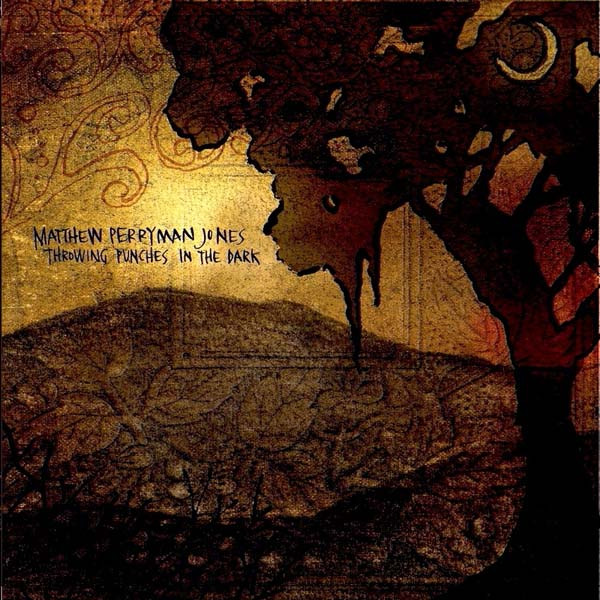
For nearly three decades, Matthew Perryman Jones has been the kind of singer/songwriter you can always count on for innovative melodies and thought-provoking lyrics. From small iconic clubs like Atlanta’s Eddie’s Attic to the small screen, his music is insightful, cathartic, and timeless. And Birmingham plays a major role in his career.
We spoke with MPJ regarding his early years as a songwriter, his first big break with the song “Save You,” his relationship with Birmingham and Scott Register, and how his writing has evolved.
Chris K. Davidson for Magic City Bands: Have you always been a solo artist, or did you experiment with a band at some point?
Matthew Perryman Jones: Well, when I was in high school, I was in a band called This Island Earth. So, my first experience playing music was in a band in high school. The guys in my band were a couple of years older than me, so they graduated and went on to college, and so the band kind of naturally broke up.
I ended up just in my room writing songs as a result of that, and I wasn’t, like, hungry to try to find a band or be in one. I was mostly just writing songs in my bedroom and not playing them for anyone.
So, it wasn’t until a handful of years later that I met this guy who was playing in Atlanta, who was curious about my writing. And so, I told him I wrote, and I had a bunch of songs, and he eventually invited me to be a part of this folk duo. He was kind of doing his own thing, but then we kind of became the folk duo for a minute. So, I guess in a way that was also kind of a band situation. It was definitely a collaborative thing, but it was also kind of the thing that launched me into my own solo career as a songwriter.
MCB: And in Atlanta, you played at a lot of famous clubs like Eddie’s Attic.
MPJ: This would have been kind of mid-‘90s in Atlanta. Decatur, where Eddie’s Attic is, was kind of like the thing. It was the songwriting venue. I think it was the start of what became listening room culture. And I loved it. I mean, it was just such a good environment.
I just learned a lot from Eddie at the time about the culture around listening rooms and venues with artists and taking care of artists, but also just like the importance of every aspect, from the person working the door to the people serving the tables, to make a wonderful experience for everybody that whole night. It was just a really wonderful environment to kind of come up through, to really instill a care about the power of live music, and the experience that it can provide people. So yeah, that was a great time.
MCB: How would you compare the songwriter scene in Atlanta to Nashville, where you eventually ended up? Obviously, Nashville is a little more commercial.
MPJ: It was a little different. And of course, I was brand new to it in Atlanta, so it was all new. There was nothing to really compare it to at when I first got into it, obviously. The first thing that comes to my mind is that in Atlanta, at least where I was coming up, the feeling I had with the people performing and the songwriters was that they just wanted to play their music for people. They wanted their songs to be heard by people. I didn’t have as much of a sense that people were trying to be huge or be a star or whatever. Some, I’m sure, were. But it just wasn’t the same sense as you were in Nashville.
And as you said, there’s more of the business aspect here. And so, there is more of that sense of am I going to play in front of somebody who might recognize me and want to make me whatever. But there’s a little bit more of that in Nashville than there was in Atlanta because there wasn’t really much of a songwriter industry. Atlanta has a lot of hip-hop and all that kind of stuff. So, it’s a different vibe there. It was different because it was so new. It probably felt purer at the time in Atlanta.
MCB: So, you’re celebrating the 20th anniversary of Throwing Punches in the Dark. What was the album before, and how was that a stepping stone to what you eventually did in 2006?
MPJ: I moved to Nashville in January ‘99, and had moved to focus on music. I had a couple of friends here who kept saying you should move to Nashville because it’s normal to be a songwriter and pursue it here. Whereas, you know, there is some degree of like if you live in Atlanta, people kind of assume you’re going to be songwriting on the side, but you’re kind of doing something else. Whereas in Nashville, it was just kind of part of the culture that you did something on the side, so that you could do music.
Even getting a job, people just assumed you were going to take two weeks off to tour. It was built into the culture. So, when I moved there, I just lived in this little cottagey house in Franklin with some friends that gave me a room upstairs, and I just sat up there and wrote songs. This batch became my first record that came before Throwing Punches in the Dark, which you cannot find anywhere. It’s not online. It’s kind of buried in history right now. I actually had somebody reach out recently, who said they just found an old hard copy of that record. I don’t even think I have a hard copy of that record anymore.
I did an album in 2000 called Nowhere Else But Here that I just did with some friends, and we put it together through the generosity of people letting me use studios and stuff. I had no money. I didn’t have any resources to make a record.
So, that was the first solo record I ever did in 2000, and then I did a little EP, which is also sort of lost in obscurity, and then got married and took a break. I really didn’t know if I would do music at all as a career. Long story short, I had been writing some songs, and there was a producer in town, a guy named Neilson Hubbard, whose work I really liked and the records he was putting out with people. I had enough songs, so I just reached out to him and said I’m interested in making a record. We ended up collaborating and doing a record together, which became Throwing Punches in the Dark.
MCB: So, you’re revisiting this record this year. Obviously, you had probably had some songs from that record that were staples of your set for a long time, but what were some of the songs that faded away, and that you haven’t played in a long time that you’re excited about playing again?
MPJ: I mean, most of the songs from Throwing Punches, I haven’t played really in a long time. They haven’t been a part of my normal set. I’m trying to think of songs. I’ve redone a song called “Echoes of Eden,” which is on that record that I’ve made more kind of quieter and more interesting.
There’s one song called “Breaking Out the Windows” that I thought was a cool song. I thought it was the coolest song on the record at the time, but it was one of those songs that nobody seemed to care about, which I always find interesting. It’s often the case that songs that I think are a little more clever or have a more interesting chord progression are the ones that people don’t really care about. It’s the one with the three basic chords that people seem to like for whatever reason.
Actually, the other day I came back across the song “One Thing More,” which I also really like on that record. I did a show that was with a band, and we pulled that one back out. So that was a recent revisitation of that song in particular, which I really dug.
It’ll be interesting to revisit those songs and re-translate them into acoustic versions for a house show setting.
MCB: Is Birmingham the start of a house show tour for the anniversary?
MPJ: This is kind of a one-off, kind of a random situation. It just lined up nicely with the 20-year mark of that record, which Reg (Scott Register of Reg’s Coffeehouse’s) has a huge part of that record having any attention to it at all.
He was the first one to play it, and he really championed that record. I think it connected with him personally at the time, and he was a huge part of a lot of stuff in my career to get things going. It’s very appropriate that I come down to Birmingham and collaborate with Reg to do this intimate house show.
MCB: You dropped this album at an interesting time for music because it was a transition between more hard, traditional physical media and the digital media that was to come, but not quite there yet. What was that like?
MPJ: It was still a lot of pounding the concrete. Even that kind of stuff like Myspace was not quite there yet. So, I was still trying to send my record to the radio and all the magazines at the time. We didn’t have this kind of network thing that we have now, where it’s a little easier to kind of become more visible. So, there was a lot of knocking on the back door at the time, as I remember it.
I do remember when I first started playing out. I was getting people’s mailing addresses to send them postcards about when I was playing a show or on a tour. You sent out hard mail. That feels so dated and antiquated. It’s weird to think that that was a thing. Now it’s almost unheard of to send a hard copy. Things are definitely different.
MCB: What are some of your other favorite Birmingham memories?
MPJ: A huge one was Regg’s 10th anniversary show at the Alabama Theatre. He invited me to be a part of that night, which included Patty Griffin and Jim James of My Morning Jacket as the headliners that night. So that was, at the time, the biggest show I’d played. It was huge for me, and I was a big fan of all those people. Definitely a big Patty Griffin fan. That was a huge night for me as an artist.
That was also the night I had just written a new song that I decided to incorporate into the set. I had not recorded it or really played it out much at all before that time. It was a song called “Save You” that Scott heard that night for the first time. And he came up afterwards. He goes, “What was that ‘Save Me’ song or whatever you did?” And I was like, “Oh, that’s a new song.” He’s like, “Did you have it recorded?” And I was like, “No, I don’t.” He’s like, “Record that song and send it to me.”
Within two weeks, we had it recorded and sent it to Reg. He started spinning it right away, and he started sending it to people, and he really helped me land my first TV film licensing deal with a company called Secret Road.
So, I’ve had big moments in Birmingham for me, and Reg was right there in the middle. He’s just that guy. He’s such a champion for music and for artists. I was extremely fortunate to somehow catch his ear and interest.
Scott Register on Matthew Perryman Jones: Matthew and I met in the mid-2000s. His album, Throwing Punches in the Dark, drew me to his songwriting and music. That album has meant the world to my wife and me to the point that Matthew played “Meghan’s Song” as Shae walked down the aisle. He played the Reg’s Coffee House 10th anniversary and wowed the Alabama Theater crowd. That was the first time he played “Save You” for me, and I was blown away. We’ve stayed friends over the years, and I still look forward to when he sends me new music. The man is an amazing talent.
MCB: With albums like Land of the Living, you started going outside your normal writing and recording routines. How do you think that’s affected your approach to music?
MPJ: I have found going into new locations to write and record opens up new compartments in myself that may not have otherwise been opened if I just stayed in a familiar environment. There’s something about the unfamiliar that can jostle things loose a bit and steer things in unexpected directions. I recorded Land of the Living on a ranch in the middle of nowhere in Texas, and it remains one of the best experiences of my life. When writing for Waking Hours, I traveled all over the country to different towns to see what each place would open up in me. In general, it makes the creative process more interesting and fun for me.
MCB: What are five albums you can listen to from start to finish at any point?
MPJ: Closing Time by Tom Waits
Wrecking Ball by Emmylou Harris
Document by R.E.M.
High Violet by The National
Tamer Animals by Other Lives
Chris K. Davidson is a writer and musician in Birmingham.