alsotheband at Saturn
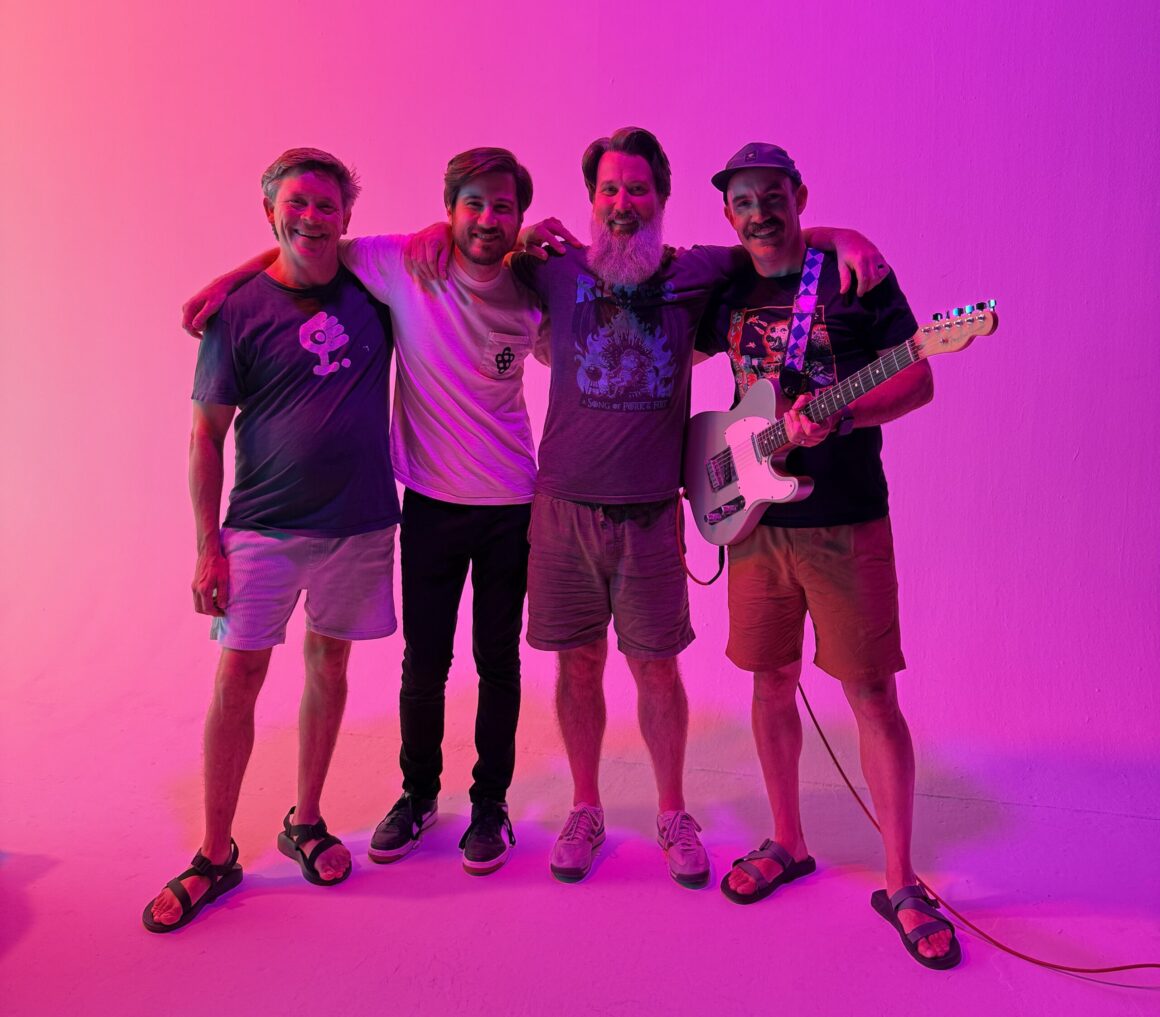
alsotheband is the Birmingham rock-and-roll outfit of two friends who have been playing together almost two decades in various acts in the scene. And the best part is that you can definitely tell.
Hank Jones and Casey Patton have created a joyously frenetic sound that doesn’t take itself too seriously (just look at their EP covers), something we all need in these chaotic times.
I spoke to the duo about the origins of their friendship, their unique songwriting process, and the one Birmingham venue they’d love to play again.
Chris K. Davidson for Magic City Bands: From what I remember, you guys have played before in several bands.
Casey: So Hank and I met probably 15 or 16 years ago at church. We both played in the band at church. I wasn’t doing much actually, with my own music. He was playing with a band called Nathan Peek Band, and they were playing a good bit. And so I had kind of put a band together and just wanted to play a little bit, and we ended up both playing at The Nick kind of randomly on the same night. We played together, and it was cool. We liked each other’s music and stuff, and then their band was kind of falling apart. Different people were moving or whatever. And so they were putting together a new band, and Hank asked me to join that band, which became Kids Your Age. And that was probably 2011.
Hank Jones: Yeah, 2010, 2011. Played for a couple of years in that iteration of the band.
CP: I started playing with Kids Your Age. We put that band together, and he and I have been playing in bands ever since.
HJ: The band following that was long Bony Arms. So there’s a lot of band names.
CP: And we had Nathan Peek and the New Thread in the middle for a little while.
MCB: So when did this project come together? I think I saw like 2021 was kind of the first recordings.
CP: Yeah, 2021 was when we put out our first EP. So Nate, the lead singer of Long Bony Arms, moved to Washington State in 2019. And so Hank and I were just kind of like, okay, what are we going to do next? And so he and I just started playing around and practicing and writing. And that’s, I guess, when it officially started.
And then of course, pandemic hit. And so we kind of stopped for a little while. Then we did it remotely for a bit, kind of sending each other ideas. And then when we were finally able to kind of get back together again, we got some drums (Roger Jones) and bass (Thomas Warren) involved. And that’s when we did that first EP.
We practiced at our friend Thomas’, at his little studio behind his house. And so we just started recording practices and that’s what that first EP is just ended up being. Practice went really well. We were like, that sounds pretty great. Let’s put out some of those songs. And we overdubbed some of the instruments and rerecorded some of the vocals, but overall it was just a live recording that we were like, let’s put something out there to at least have a something people can listen to.
HJ: I think a little bit of background or a little more color on the background is when Nate left, that was the end of a long run with him as the kind of the lead guy of the band, the singer-songwriter. And so we were trying to figure out what do we do, and Casey is gifted songwriter. He’d been writing for years prior to these bands. And I was not a songwriter, but we were like, hey, let’s try to have a framework here to get something going and not just be Long Bony Arms continued without Nate.
And so we were challenging each other. We started out sending each other pictures. Just random pictures to inspire each other and no rules. Just let’s have fun. Not too heavy or no heart-string type songs. Keep them fun. Keep them within two to four minutes. Just keep it going. And that was kind of like the initial framework, if I remember correctly. And quickly Casey became the the go-to songwriter.
CP: Was more about quantity than.
HJ: He went on a tear, and I couldn’t keep up. I was like, you know what this is? I was going to put my energy into accompanying his songs and still sending stuff to inspire him to write.
CP: That’s pretty much what we still do. If I come up with an idea, whether it be a melody or just messing around with the guitar or whatever, I’ll be like, this might could be something. And I’ll just text Hank and ask him to shoot me a picture. As far as I know, he just looks at his camera roll and picks something and sends it to me. And it could literally just spark something. The song could literally be about the picture or have nothing to do with the picture, but it just gives me some kind of starting point. Pretty much every song is based on some random, usually dumb or weird, picture that Hank has sent me.
HJ: I don’t give any context, but I pick something out or I might take a picture of something where I think Casey can find a story. And then send it along. And sometimes there might be like some text in it that means nothing to whoever. But it’s just a way to get the ball rolling on something without wringing your hands over a former heartache.
CP: Like he was saying one of our rules was let’s don’t really write anything personal. Let’s just make this where it’s hopefully all fun and upbeat. We have a few slower songs, but overall, they’re pretty upbeat songs. And I know I’ve written stuff in the past where it’s personal and I’m like, if people don’t like this, that might hurt my feelings. And so now I’m just writing songs that don’t matter necessarily, right? So if someone’s says that’s not really for me, that’s fine. It doesn’t have to be for you. It’s not personal at all.
MCB: So what is the most most unique or weirdest image that you’ve drawn inspiration from?
CP: That’s a good question. I remember one that was a window sill that had “Skibidi Toilet” carved into it.
CP: TI don’t even remember what that song turned out to be.
HJ: Yeah. I saw someone had carved the toilet in a state park building, where it’s an overlook. And I was like, Casey needs this picture.
HJ: I know one of them that inspired an interesting song. I was just on a work call one day, and there was a guy that just happened to look like one of our friends, and I took a picture of him. I just sent it to Casey. This looks like our friend, but it’s not him. And then he wrote “Same or Different Person,” which is awesome.
Speaker 3: It was. Yeah, it was our friend Cleve and another friend of his. And Hank’s phone was asking if this was Cleve.
MCB: Wow.
CP: And that turned into “Same or Different Person.” And it has nothing to do with two people that look alike, but it’s a good song title and chorus.
Oh, another good one that I like the story of is Hank was riding his bike at Oak Mountain and got a text from his dad that just said call me when you have a minute. And he just sent me the screen grab of the map where he was and his dad’s text. And we have a song called Oak Mountain Lake Road. And it’s a whole made up story, but it’s about being on Oak Mountain Lake Road and telling somebody to call you when you have a minute.
HJ: Yeah. The reason for even sending it is just like everybody’s gotten that text from their dad, right? Or their mom. Instead of calling me, you text and say call me. And I figured Casey could do something with that.
CP: It’s something that people will recognize.
MCB: So also speaking of images talk about the the two EP covers with the cows.
HJ: That was Cleve Smith.
CP: Actually, the guy that was one of the guys in the “Same or Different Person” text. He’s a graphic designer. We had 11 songs that we wanted to record and put out. But we had two different ways we wanted to do it. And so we said we’ve got enough songs for a full album, but they don’t really mesh. Like it feels like two different albums. And so we decided to just release it as two different pieces, but pretend like it’s one album.
And so that’s why we released it as Side A and Side B. We asked Cleve if he would design the the covers. We called it Broken Record, 1. because we have a song called “Broken Record” that’s not on either one of them, but we want to use that for some reason. And we were like, technically it is a broken record. It’s a record broken in two parts. But we didn’t want that to be why it was called Broken Record.
We were thinking more visually, like someone breaking a record. And so we let him run with that. And he went with the whole livestock thing like cows breaking records at the county fair. There’s a whole lot of random information that goes into those two EPs that doesn’t matter at all. It doesn’t mean anything to anybody, except for us.
One side was recorded in a different manner than the other side. One was more live collaboration with a bass player and a drummer, while the other side was sent to a friend in Nashville to work on and let him do what he wanted to with. So there are two different styles of recording, and it didn’t make sense for them to go together. So that’s why it’s broken.
HJ: We talked about doing it as one and mixing the tracks to where it would flow a little bit and make a little more sense. And it just didn’t feel right. It felt like two pieces of one thing.
CP: But if you pressed it, it would be a side A and a side B.
HJ: Which was a cool idea. Not that we’ll ever have any vinyl made, but we thought that was a cool idea of this EP and this EP essentially come together as one album. The two album covers connect. So if you turn it around, or if it had a gatefold and opened, it’s one big picture. Cleve found that image, doctored it up and made it look cool.
CP: And Cleve had done art for Nathan Peek Band for at least three different albums. Really great job on those.
HJ: And Ryan Russell worked on Long Bony Arms.
MCB: So being in the scene with all these different bands, what have you seen as far as changes and evolution?
HJ: I feel like mostly that’s a tough question for us because I feel like we’re always kind of like right outside the scene.
CP: Yeah.
HJ: I feel like there are the bands that everybody knows. Like everybody knows these ten bands that are Birmingham bands and two or three of them are playing together every time, which is awesome. And I think we have a great music scene. I just feel like we’ve never quite finagled our way into those bands or whatever. I feel like Long Bony Arms played a lot. I feel like we played a lot of shows, and we have decent people there, but it was we were never playing with the typical Birmingham bands.
CP: I guess there have been things that changed if we go back 20 years, but there’s been some things that are exactly the same, right? The Nick has always been there and continues to be the place where you can hop on a bill when a band that’s touring is looking for some local support.
Also, playing places bars like Oasis and the Metro Bistro, rooms like that where you had to come up with three hours’ worth of songs. That’s a different night than playing support for someone at the Nick. I think the introduction of all the the breweries throughout the years changed our shows. We went from these late night shows to late evening shows, where we learned how to play at a little more subdued set. I think of playing places like Marty’s, where you start sometimes at midnight. So I would say the venues have really changed, with the exception of the Nick, and it’s tried and true. It’s always been there. And everybody’s played it, and it’s still like an amazing place to sound. Really good.
I think our mentality has changed at this point, too. With Long Bony Arms and all the bands prior to that, we didn’t care how long we had to play. We just wanted to play. And so if somebody was like, come play three hours, we would figure it out. Like We’ll add a handful of covers or whatever and fill out that time. And just with this band, we’re all old dudes and everybody but me has kids. So give us 30 minutes to an hour, and we’re happy. Like that’s a fun night.
MCB: And I also feel doing the 30 minutes to an hour, it makes it a little more entertaining because the stakes are almost a little higher. Sure. It’s like you have this amount of time to really prove your point.
CP: And I like that. We’ve only played two shows as this band, and both were 30-minute sets. And it was fun to me and for us to come up with the set, the 30-minute set of like, okay, what songs do we really want people to hear? Because we may have an hour and a half worth of material right now. And we have to figure out what’s going to make us shine in this venue. And how can we make a set list together that is really fun to play? We all hate talking on the mic if we don’t have to. And so it’s fun to come up with transitions. So there’s no downtime to talk. We’ll be done in exactly 30 minutes, right? And the next band can go on.
And if we have anything to say about it, we want to start right when we told people we were starting. If it’s 8:00, we want to start at 8:00. We want people to have a good time.
HJ: It is a different mentality. When you’re on a bill and you got that 30 minutes or 45 minutes or an hour, you just want to make it the most efficient as possible.
I will say another thing that’s changed in the scene that I can pick up on is that obviously, the pandemic threw a monkey wrench into everything. And we’ve just gotten older. But it seems like, and I might just be disconnected, but there used to be a little bit more mini-festivals to play. I know some of these things still exist, but there used to be a lot of them.
HJ: Secret Sages, stuff like that.
CP: It seemed like we were playing a lot of those things, and they were always fun. They don’t seem to be as prevalent.
HJ: And there used to always be something at Sloss. Like a, a barbecue competition festival or something to play, you know, like just random stuff. And those things still might be happening. That just hasn’t been on our radar.
MCB: Name a venue in Birmingham that you’ve played together. You guys can each do a different venue if you want, but one that’s no longer around that you would love to play again.
CP: That’s easy for both of us.
HJ: Yeah.
CP: Bottletree
HJ: Obviously. Yeah.
CP: So I moved to Birmingham in 2006, and I’m pretty sure Bottletree opened in 2006, maybe 2005, but I think it was 2006. And so it was pretty new when I was pretty new. And I remember going there. I can’t remember what the first show was, but I remember going there and thinking, I don’t know if I like this place just because of how it’s set up.
If you’re not in the front, it’s not a great room. The bar’s right here. It’s hard to get to the bar for a drink. had a lot of immediate negativity towards it. But as soon as the band started playing, I was like, oh, okay, this is awesome. This sounds great. The crowd’s fun, blah blah blah. Then I like literally started going all the time.
And every time I went, I just had more and more fun and I was like, okay, if you can get past the initial “this doesn’t look like a club that I’m used to,” it was so cool. Now it’s my favorite venue I’ve ever seen a show in, and I’ve seen my favorite shows I’ve ever seen there. And we got to play there a few times. Now looking back, it was the coolest venue that’s ever existed to me.
Bring it back. Like that would be awesome. I’m glad that Saturn exists because it’s kind of a stepbrother. But yeah. Bottletree. Hands down would be the one if I could play again. I agree. Some now-legendary acts and then-legendary acts to us played there, and then to play the same stages as them and be treated just about as well as they were.
We were bringing in a good crowd, but not a huge crowd. And just to be treated like we were one of the touring bands. And to have access to the trailer in the back was really neat. And they didn’t have to do that, you know? Just a great place. I mean, I never had a bad time there.
MCB: What are five albums you can listen to from start to finish at any point?
HJ:
Some Girls (Deluxe Edition) – The Rolling Stones
Rust Never Sleeps – Neil Young
Fables of the Reconstruction – REM
Rain Dogs – Tom Waits
Songs from the Big Chair – Tears for Fears
CP:
Canopy Glow – Anathallo
Curse Your Branches – David Bazan
Transatlanticism – Death Cab for Cutie
In Rainbows – Radiohead
Reconstruction Site – The Weakerthans
alsotheband will be playing at Saturn on Wednesday, April 1st, with Old City Champs, Guthrie Echoes and Mark Robinson. Find out more at the venue’s website.
Chris K Davidson is a Birmingham writer and musician.